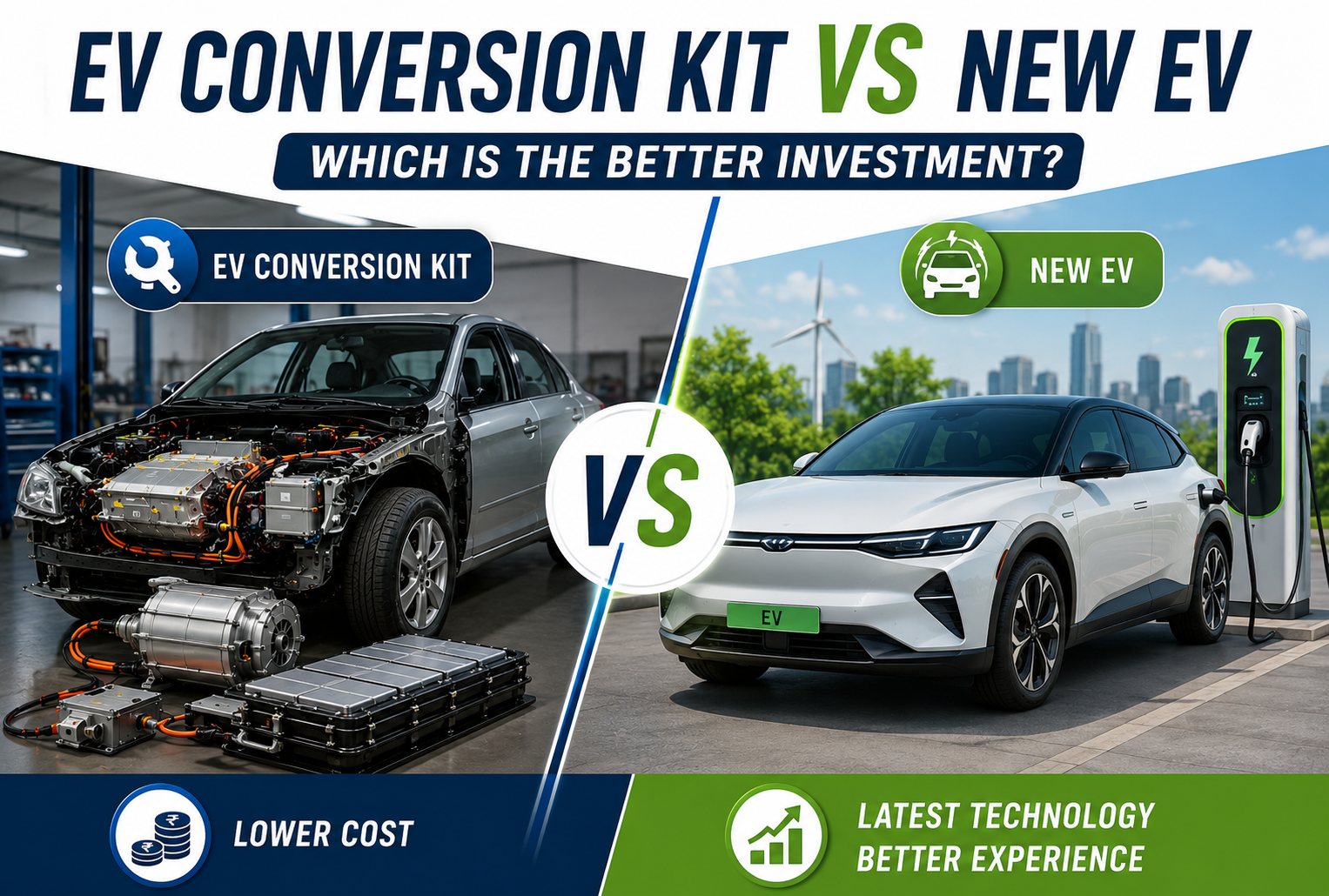
As electric mobility continues to gain momentum, many vehicle owners are exploring ways to reduce fuel costs and lower emissions. One question that frequently arises is whether installing an EV car conversion kit on an existing vehicle is a smarter financial decision than purchasing a brand-new electric vehicle.
While both options offer the benefits of electric driving, they differ significantly in terms of cost, performance, reliability, warranty coverage, and long-term value. Understanding these differences can help you make the right investment decision.
What Is an EV Car Conversion Kit?
An EV car conversion kit is a package of components used to transform a conventional petrol or diesel vehicle into an electric vehicle.
A typical conversion kit includes:
- Electric motor
- Battery pack
- Motor controller
- Charging system
- Wiring and connectors
- Battery management system (BMS)
The internal combustion engine and related components are removed and replaced with an electric drivetrain.
What Is a New Electric Vehicle?
A new EV is designed and manufactured from the ground up as an electric vehicle. Every system, including the battery, motor, chassis, cooling system, and software, is optimized for electric operation.
Examples include:
- Tata Curvv EV
- Mahindra XEV 9e
- MG Windsor EV
Initial Cost Comparison
EV Car Conversion Kit
The total conversion cost depends on:
- Vehicle type
- Battery capacity
- Motor specifications
- Installation complexity
- Regulatory requirements
Pros:
- Lower upfront investment than many new EVs
- Utilizes an existing vehicle
- Avoids purchasing a new car
Cons:
- Costs can increase with higher battery capacity
- Additional certification and modification expenses may apply
Buying a New EV
Pros:
- Fully integrated electric system
- Manufacturer warranty
- Latest technology and safety features
Cons:
- Higher purchase price
- Financing costs may increase total ownership expense
Winner: EV Conversion Kit (Upfront Cost)
For vehicle owners with a well-maintained car, conversion can be more affordable initially.
Performance Comparison
Converted EV
Performance depends on:
- Quality of conversion
- Motor size
- Battery capacity
- Weight distribution
Potential challenges include:
- Limited range
- Reduced efficiency
- Non-optimized vehicle dynamics
New EV
Benefits include:
- Better acceleration
- Optimized energy efficiency
- Advanced regenerative braking
- Integrated battery cooling systems
Winner: New EV
Factory-built electric vehicles generally deliver superior performance and driving experience.
Driving Range
Range is one of the most important factors when evaluating electric mobility.
EV Conversion Kit
Typical range varies significantly depending on battery size and vehicle weight.
Range may be suitable for:
- Daily commuting
- Urban transportation
- Short-distance travel
New EV
Modern EVs are engineered to maximize range through:
- Aerodynamic design
- Efficient power electronics
- Advanced battery technology
Winner: New EV
Most factory-built EVs offer greater range and efficiency.
Maintenance Costs
One major advantage of electric vehicles is reduced maintenance.
Converted EV
Maintenance may involve:
- Custom parts
- Specialized technicians
- Limited service availability
New EV
Benefits include:
- Manufacturer support
- Authorized service centers
- Standardized components
Winner: New EV
Maintenance and support are generally easier and more predictable.
Warranty and Reliability
EV Conversion Kit
Challenges include:
- Limited warranty coverage
- Dependence on installer expertise
- Variable component quality
New EV
Advantages include:
- Battery warranty
- Vehicle warranty
- Roadside assistance
- Software updates
Winner: New EV
Manufacturer-backed warranties provide greater peace of mind.
Environmental Impact
Both options contribute to reducing emissions.
EV Conversion Kit
Environmental benefits:
- Extends the life of an existing vehicle
- Reduces manufacturing waste
- Promotes circular economy principles
New EV
Environmental benefits:
- Improved energy efficiency
- Lower lifetime emissions
- Advanced battery recycling programs
Winner: Tie
Both options offer meaningful environmental advantages.
Resale Value
Converted EV
Resale can be challenging because:
- Buyers may have concerns about conversion quality
- Financing options are limited
- Market demand varies
New EV
Benefits include:
- Stronger resale market
- Recognized brand value
- Easier financing and insurance
Winner: New EV
Factory-built EVs generally retain value more effectively.
When an EV Car Conversion Kit Makes Sense
An EV conversion may be a good choice if:
- You already own a vehicle in excellent condition
- You want a lower initial investment
- You primarily drive within cities
- You enjoy custom engineering projects
- You wish to preserve a classic or unique vehicle
When Buying a New EV Makes More Sense
A new electric vehicle may be the better option if:
- You want maximum reliability
- You need longer driving range
- You prefer manufacturer support
- You value advanced technology and safety features
- You plan to keep the vehicle for many years
Long-Term Investment Analysis
| Factor | EV Car Conversion Kit | New EV |
| Initial Cost | Lower | Higher |
| Performance | Moderate | Excellent |
| Range | Variable | Better |
| Warranty | Limited | Comprehensive |
| Maintenance Support | Limited | Strong |
| Resale Value | Lower | Higher |
| Technology | Depends on kit | Latest Features |
While an EV car conversion kit may save money initially, a new EV often provides greater value through better efficiency, warranty coverage, reliability, and resale potential.
Final Verdict
The choice between an EV car conversion kit and a new electric vehicle depends on your goals, budget, and driving needs.
If your primary objective is minimizing upfront cost and repurposing an existing vehicle, a conversion kit can be an attractive option. However, for buyers seeking the best long-term ownership experience, advanced technology, stronger resale value, and comprehensive warranty protection, purchasing a new EV is generally the better investment.